German RAD Hewer Dagger -
The German economy went through a depression during the early 1930's. The German government created an organization
called the RAD to boost the economy through employment generated by the inception of massive public works projects.
As a result of such effort the German infrastructure was rebuilt producing things such as the Autobahn.
It is about this time that Hitler had launched an expansion of the armed forces. Service in the military was deemed
mandatory. The RAD was employed as a means to breach the time between graduating from school to entering military
service.
Service in the RAD included military style drills such as marching, obeying orders, etc.
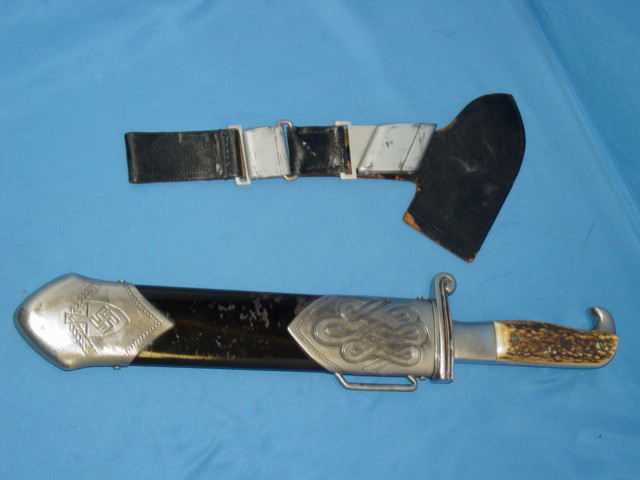
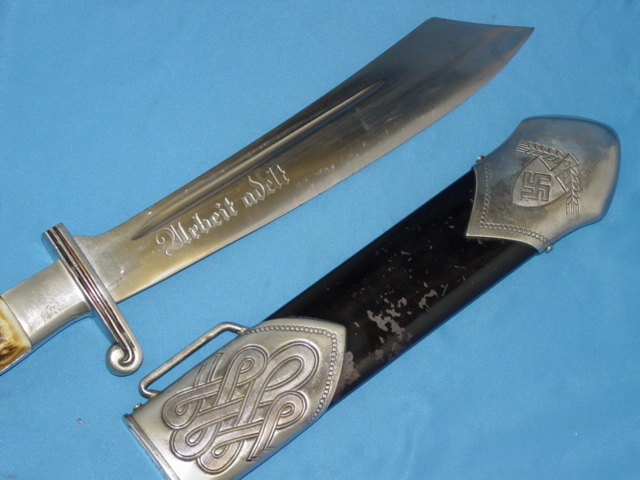
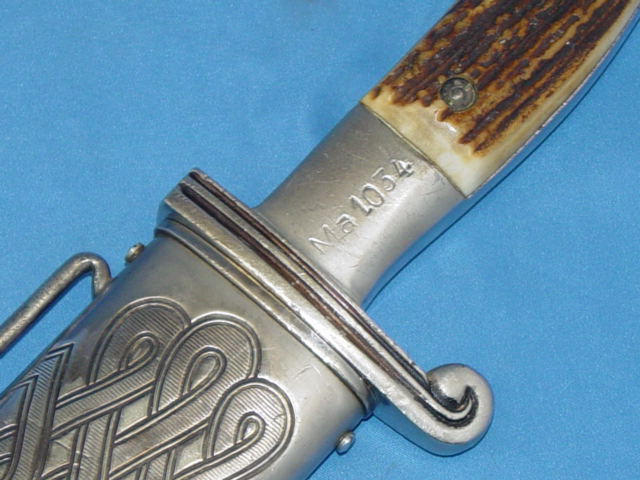
In 1934 a dagger was issued to be worn by all members of the RAD organization. That dagger is featured on this page.
|
|
 |
 |
This is an identification guide for RAD daggers. Multiple photos and descriptions
help familiarize the visitor with the properties and history of this piece of
history. A price guide is also included to illustrate the current value of the
dagger in the collector's market. Multiple years are examined to present a
trend.
This information is presented courtesy of
MilitaryItems.com, a provider of
fine military antiques and collectibles. Our inventory encompasses a large array
of items. With over 3,000 pieces listed for sale in our website. New inventory is
added daily.
|
|
|
|
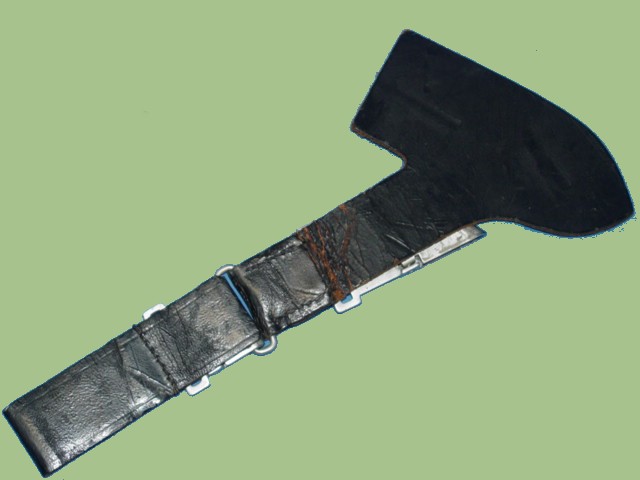
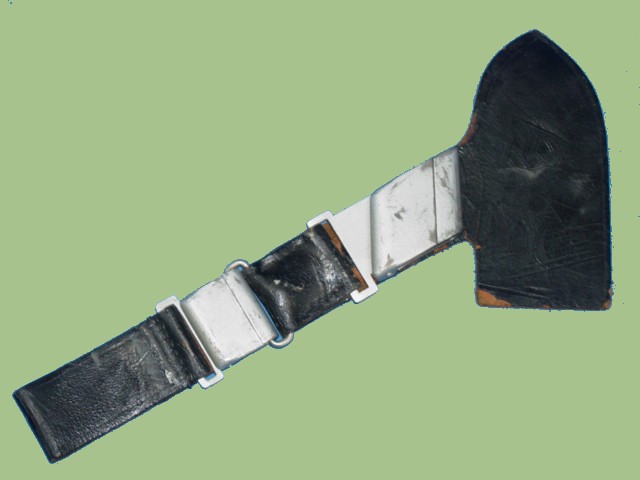
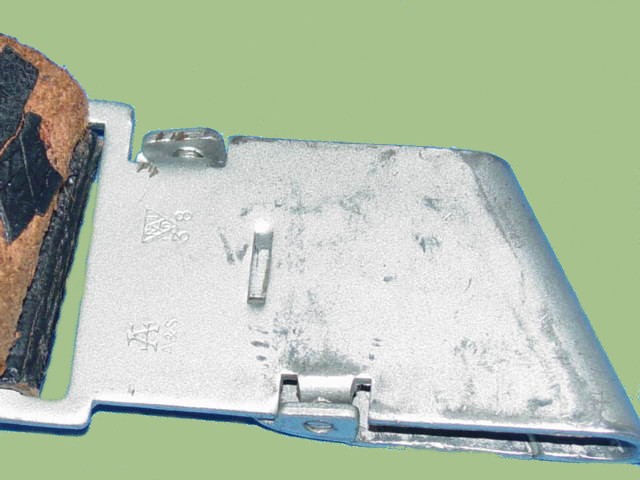
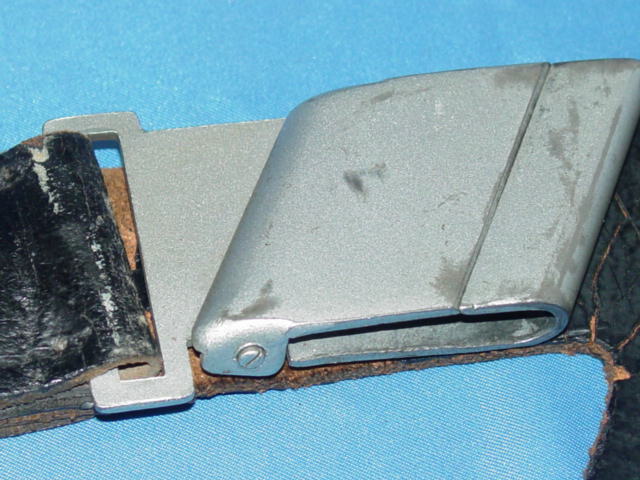
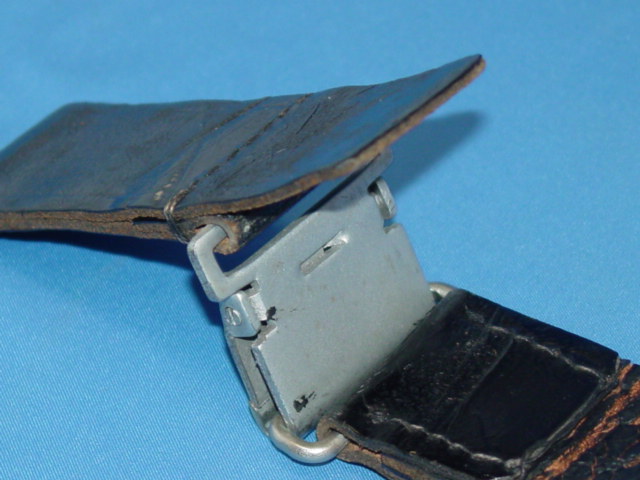
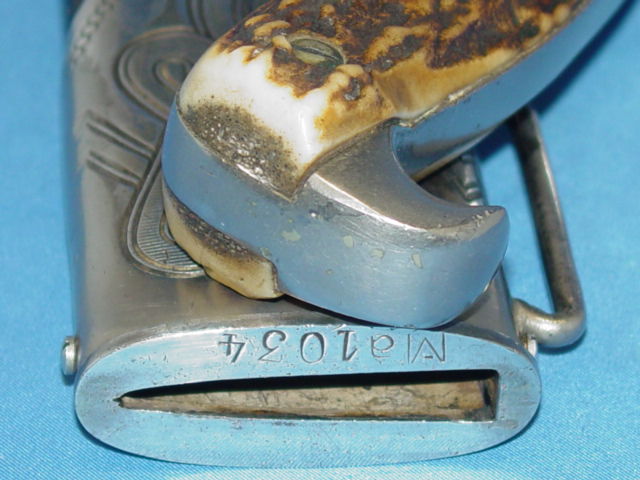
The hanger has several metal fittings. Some of them bear markings. The example
shown below has three different markings. The first one is the letter "A" which
is the symbol for the "Assmann" company who manufactured the piece.
The RAD triangle is also stamped here. Just below the triangle is the number 38.
The clips are spring loaded.
|
 |
|
 |
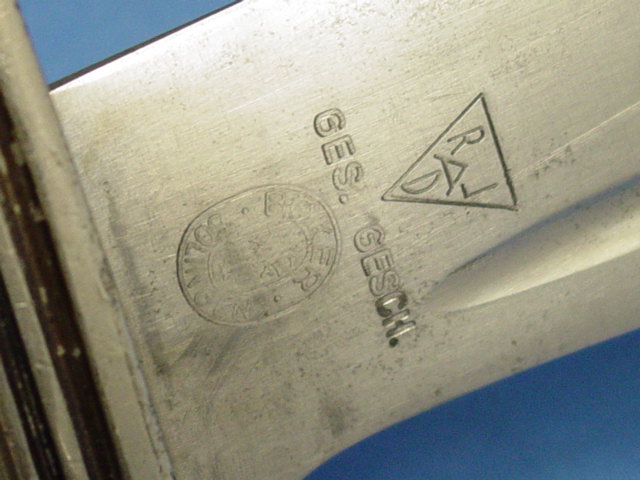
The blade of the dagger has several markings stamped near the base. They consist of a
downward facing triangle. Inside of it are the letters RADJ cleverly arranged in a
triangular format. The word "Ges Gesch" follows just below. This indicates a
trademark.
The last marking is the manufacturer's logo. The design is two vertical ovals, one
inside the other. Space has been left in between the ovals. This is where the name
of the manufacturer and the city where the dagger was produced are placed. The maker's
name is Boker. The city is Solingen.
It is interesting to note that Solingen produced a large number of daggers, swords and
edge weapons during the Third Reich and the present day.
|
 |
|
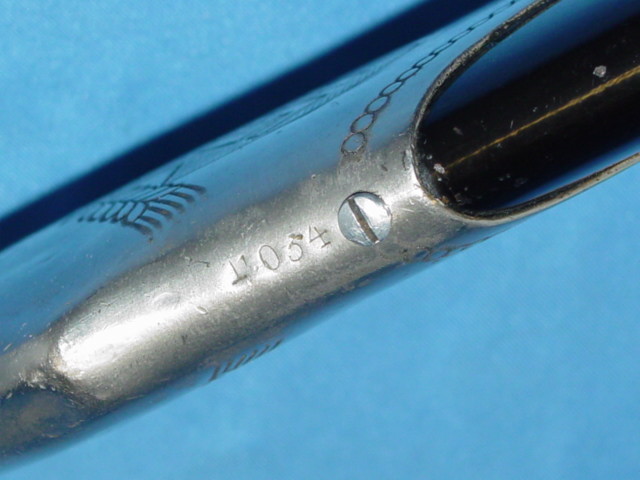 |
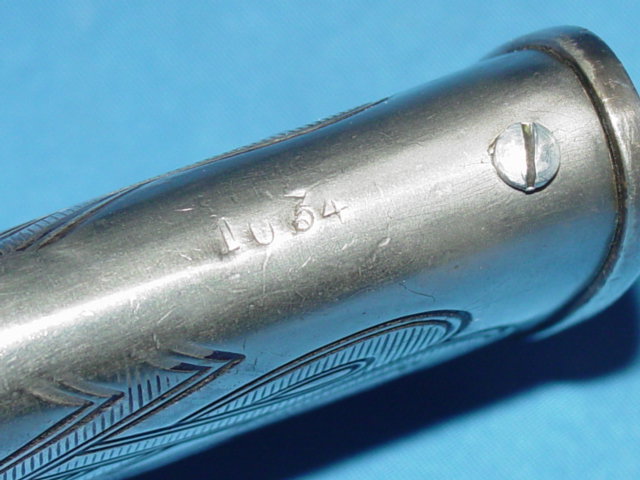
This edge weapon is currently being
reproduced. It is becoming more difficult to be
able to tell the fake ones from the real ones because the quality of the reproductions is improving. The
collector must become familiarized with the construction style and materials employed in the manufacturing
of edge weapons. Attention to the details is critical in order to be able to determine the authenticity
of the item.
If you have an interest is seeing other edge weapons of the Third Reich, you can do so by going to our
WWII German Edge Weapons identification guide. Where
we cover blades from the Heer (Army), Navy (Kriegsmarine), Air Force (Luftwaffe) and other organizations.
|