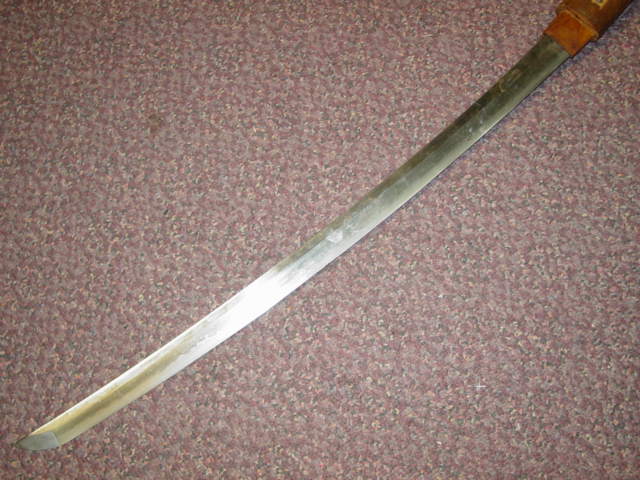
The blade shows some surface rusting but not in bad shape. The temper line still visible. This line is
important because it was used by the maker as a form of signature. The shape of the temper can be used to
identify the master who made the sword.
One of the steps of sword restoration involve polishing the blade to regain the original pattern of the temper
line. This can only be done by trained masters. It involves the use of various stones and techniques. A very expensive and time consuming process.
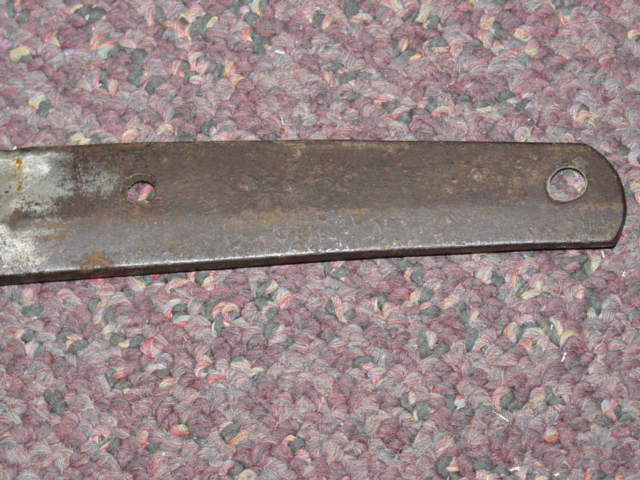
The Tang is not signed. Original rust is present (has not been cleaned). Two holes have been bored for
handle-mounting purposes. Wooden pegs are used for this purpose.
The size and the shape of the Tang could help identify the school that made the blade.
|
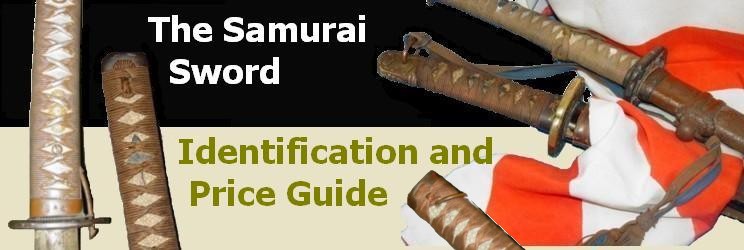
This page is a recognition and identification guide for Samurai swords.
Multiple detailed photos of a specific sample are provided. Descriptions point
out clearly defined points that should be noted.
One of the most commonly asked questions is "How much is my Samurai Sword worth?".
A price guide is included here to address this question. The value of the swords is
reviewed over a period of several years. A trend can be observed. The present worth
of the edge weapons in the collector's market is illustrated.
This service is provided free of charge to the visitor/enthusiast courtesy of
MilitaryItems.com,
a company dedicated to the preservation of military history and to providing quality
military antiques and collectibles to museums, institutions and the general public.
|
|
The tip shows minor pitting and remains strong. No signs of improper sharpening are present. The blade
still retains some of the original heat treatment. It is important that owners learn the basics of blade handling. This
will avoid expensive damage and loss of value to the sword. Some basic tips include:
- Do not touch the blade
- Do not apply oil to the blade
- Store in a dry place
- Wipe the blade clean with a soft cotton rag.
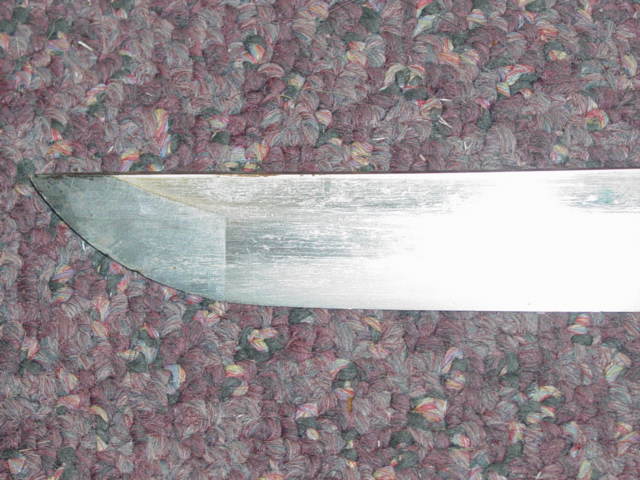
The shape of the tip helped determine the type of sword.
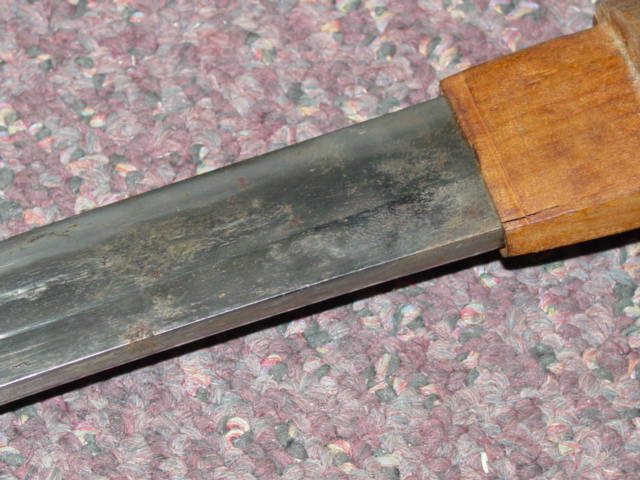
This Samurai Sword may be currently reproduced.
It is becoming more difficult to be able to tell the fake ones from the real ones because
the quality of the reproductions is improving. The collector must become familiarized with
the construction style and materials employed in the manufacturing of this item.
Attention to the details is critical in order to be able to determine the authenticity of
the collectible.
If you have an interest is seeing other Japanese Samurai swords, you can do so by going to our
Japanese Samurai Swords Price Guide
identification guide. Where we cover Samurai swords from all periods.
| 





 Click on the sword for additional details !