|
SAMURAI SWORD SWORD SMITHS AND THEIR SCHOOLS -
The craft of Samurai sword making has long been considered an art form. Various towns in Japan would have sword makers
who would develop their own techniques to treat and shape the steel. The swordmaker would create a "school", where locals
from the village could learn the art of sword making.
The techniques of sword manufacturing were well guarded secrets. Having the ability to create light weight swords that had
the strength to make it through battles, and hold an edge capable of cutting through armor would make the difference
between life and death.
Each school would develop ways in which to marke their creations. Often times this was done by developing a heat temper
pattern for the blade and signing the tang.
SWORD SMITHS
1500's
| Name |
Rating |
Sword |
|
Name |
Rating |
Sword |
|
Name |
Rating |
Sword |
| |
|
|
|
|
|
|
|
|
|
|
1600's
| Name |
Rating |
Sword |
|
Name |
Rating |
Sword |
|
Name |
Rating |
Sword |
| |
|
|
|
|
|
|
|
|
|
|
1700's
| Name |
Rating |
Sword |
|
Name |
Rating |
Sword |
|
Name |
Rating |
Sword |
| |
|
|
|
|
|
|
|
|
|
|
1800's
| Name |
Rating |
Sword |
|
Name |
Rating |
Sword |
|
Name |
Rating |
Sword |
| |
|
|
|
|
|
|
|
|
|
|
1900's
| Name |
Rating |
Sword |
|
Name |
Rating |
Sword |
|
Name |
Rating |
Sword |
| Masakane |
|
|
|
Masakane |
|
|
|
Yoshiaki |
|
|
SWORD PERIODS
| ANCIENT SWORD PERIOD (Until AD 900) |
These swords were made primarily by Chinese and Korean swordmakers. The quality of the steel was not very
good. The swords would break during combat. The swords were primarily straight, instead of having the
iconic curve look of the traditional Samurai sword.
Some samples of these swords have been found in tombs. Many of them were not very thick, indicating the
possibility that they were ceremonial swords instead of combat weapons.
| OLD SWORD PERIOD (900 to 1530) |
The following list of schools flourished during the old sword era:
BIZEN SCHOOL
YAMASHIRO SCHOOL
YAMATO SCHOOL
SOSHU SCHOOL
MINO SCHOOL
The schools were located in different regions of Japan. The characteristics of each sword are partly dictated
by the geographical location because of the source of the ore needed to produce the steel for the sword.
Most of the modern swordsmiths produce blades using the Bizen style.
| NEW SWORD PERIOD (1530 to 1867) |
The following is a list of the provinces and the sword smith's who
represent some of the finest expressions of the art generated during
this time period:
YAMASHIRO PROVINCE
SETTSU PROVINCE
MINO PROVINCE
MUSASHI PROVINCE
OMI PROVINCE
IWASHIRO PROVINCE
RIKUZEN PROVINCE
WAKASA PROVINCE
ECHIZEN PROVINCE
KAGA PROVINCE
BITCHU PROVINCE
AKI PROVINCE
KII PROVINCE
BIZEN PROVINCE
HIZEN PROVINCE
SATSUMA PROVINCE
|
 |
| MODERN SWORD (1868 to now) |
It is during these years that Japan begins to open to
the rest of the world and modernizes. This period rushed the
end of the Samurai era. Swords could no longer be worn and the
swordmakers started to vanish.
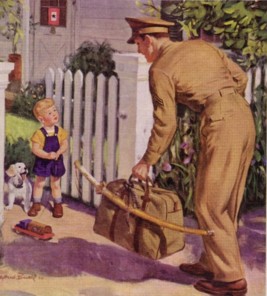
The Showa era (1926 to now) is considered to be a part of the modern
sword period. It is during this time that WWII occurs and helps
revive the art of swordmaking. However, it is to no extent
comparable to what it once was.
The years after the WWII (1945) marked a very grim period for the art of sword making. Many of the elder
swordsmiths died without leaving an apprentice to continue the trade. Many of the students quit under the
intense scrutiny of regultions. The country had been defeated and destruction was everywhere.
Swordsmiths today are regulated by a set of rules established in 1953. The rules are set to ensure that
the craftsmen produced pieces of art and not weapons of war. The rules are as follows:
| Rule 1 |
All swordsmiths must be licensed. to obtain a license the person must serve an apprenticeship under a
licensed sword maker for a period no less than five years.
|
| Rule 2 |
The maximum production of swords from a licensed sword maker is two long swords (over 2 feet) and three
small swords (under 2 feet) per month.
|
| Rule 3 |
All swords must be registered with the police.
|
| Rule 4 |
Any cutting instrument with a length of under 6 inches, which has no hole in the tang is considered to be
a knife an is exempt from these rules.
|
The art of sword making in Japan has seen a resurgance. An organization has been formed to preserve the art and
sword making and promote the appreciation of the swords. The Nihon Bijutsu Token Hozon Kyokai (The Society for
the Preservation of Japanese Art Swords, was founded in 1960 and is headquartered in Tokyo.
The group holds an anual competition where swordsmiths can enter a blade. There is a panel of 15 judges that
review the workmanship. The judges come from a variety of trades; swordsmiths, polishers appraisers and others
decide the outcome of the contest.
|

|
WE BUY JAPANESE SWORDS - All types of Japanese edge weapons. Whether it is a WWII era Samurai sword or an
older type of blade.
The process gets started by you sending us an
Email .
We will respond to your inquiry normally within 24 hours and in many cases much faster.
We can tell you what you have, what it is worth and how much we can pay you.
One sword or an entire collection -
Email Us .
|
 |
|
|