|
WWII JAPANESE ARMY SIGNED KATANA SWORD - #20 -
The Samurai sword is one of the most desirable military collectibles in the market. Thanks to their
use in movies and television, the samurai sword has become a household name.
The Katana was developed during the Momoyama period. Designed to give the Samurai a farther
reach when mounted on a horse. Typically measuring between 24 inches to 30 inches.
The sample shown here is a WWII Japanese Officer Samurai Sword. At one point these swords were not the
most desirable. However, in recent years they have gained popularity. This section of the website is
dedicated to the discussion of the WWII era Samurai sword.
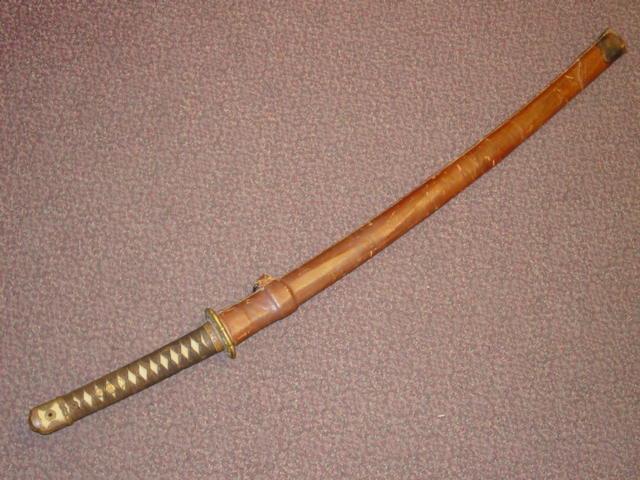
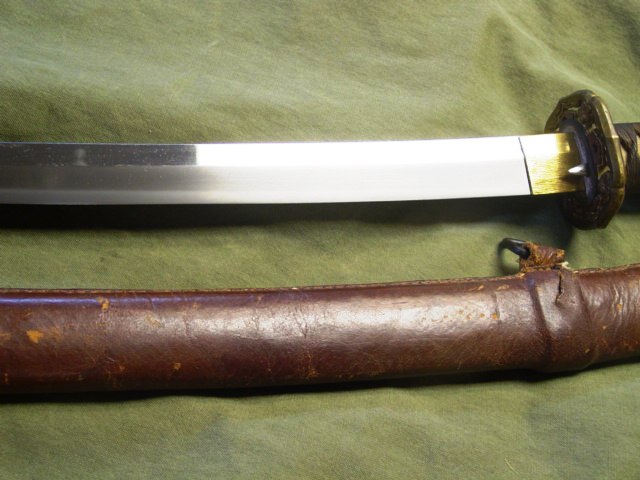
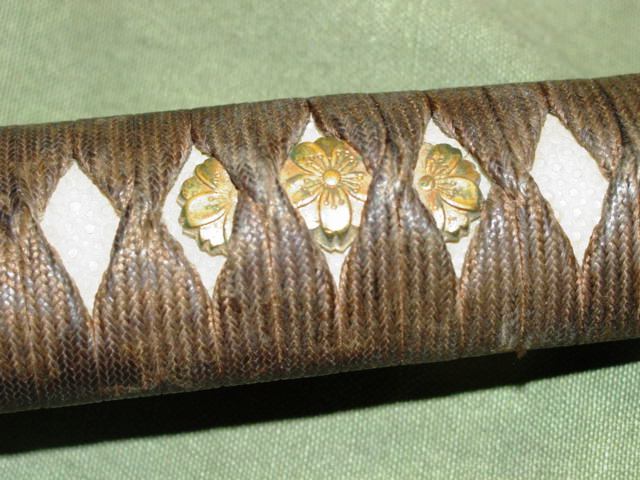
Wrapping and menuki are cast-formed. Typical WWII Imperial Japanese Army style fittings.
Single suspension ring from the scabbard. It is said that during battle soldiers would not use the ring
but rather would stick the sword through the belt the same way the Samurai in the old days would.
|
The Samurai sword has a very rich history. The sword has been manufactured for several centuries and continues
to be produced today. The sword represented more than just a weapon. It was the soul of the Samurai warrior.
When attempting to identify the type of sword you have It is important to keep in mind that the fittings of
a sword (scabbard, handle, crossguard. etc.) may be identical from one sword to another. The reason why is
because during WWII the same fittings were used in all Army swords, Navy swords, etc. Armed forces are all
about uniformity. They strive to make everything the same.
This is the reason why a sword cannot be identified merely by its external appearance.
Understanding the different components that make up the Samurai sword is the first step in figuring out the
type of sword you have. That is the reason why we have created the
Understanding the Samurai sword section as a means to
provide a novice with the basic knowledge to start the path of determining the questions everyone has;
who made the sword, how old it is nad how much it is worth.
|
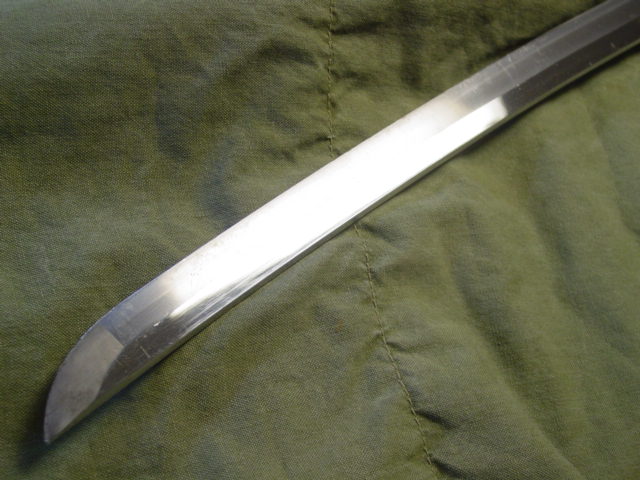
The blade is this sample is in exceptionally good condition. This is a rarity among WWII brought back swords.
The GI's did not know how to treat the swords and the blades payed the price for it. Often times rusting or
showing multiple finger prints. In worst case scenarios they were sharpened.
|
This page is a recognition and identification guide for Samurai swords.
Multiple detailed photos of a specific sample are provided. Descriptions point
out clearly defined points that should be noted.
One of the most commonly asked questions is "How much is my Samurai Sword worth?".
A price guide is included here to address this question. The value of the swords is
reviewed over a period of several years. A trend can be observed. The present worth
of the edge weapons in the collector's market is illustrated.
This service is provided free of charge to the visitor/enthusiast courtesy of
MilitaryItems.com,
a company dedicated to the preservation of military history and to providing quality
military antiques and collectibles to museums, institutions and the general public.
|
|
|
WE BUY JAPANESE SWORDS - All types of Japanese edge weapons. Whether it is a WWII era Samurai sword or an
older type of blade.
The process gets started by you sending us an
Email .
We will respond to your inquiry normally within 24 hours and in many cases much faster.
We can tell you what you have, what it is worth and how much we can pay you.
One sword or an entire collection -
Email Us .
|
 |
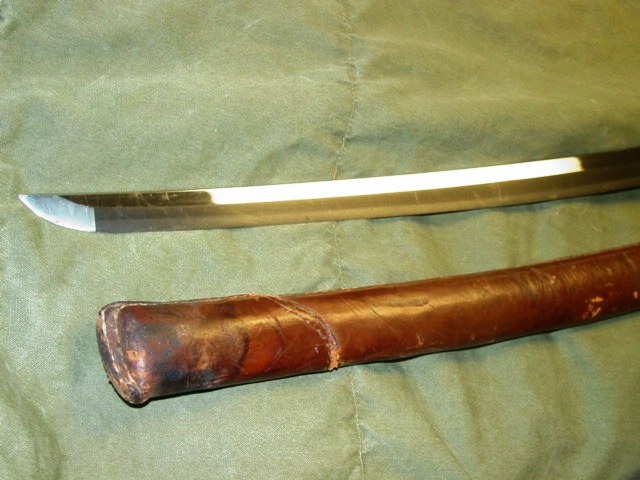
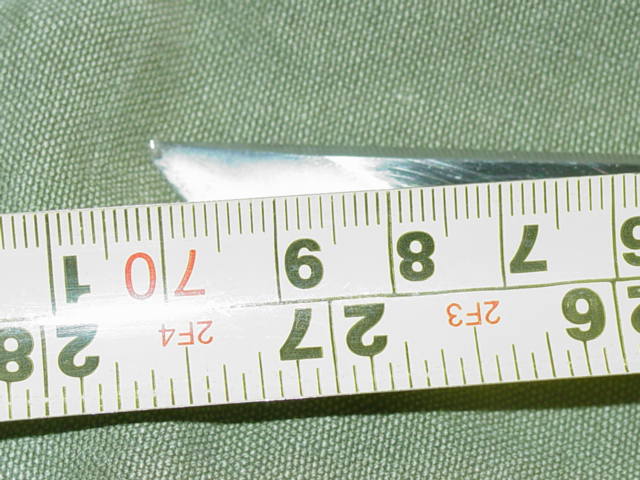
The overall length of the sword is approximatelly 39 inches. The length of the blade, measured from the
throat to the tip is approximatelly 27.5 inches.
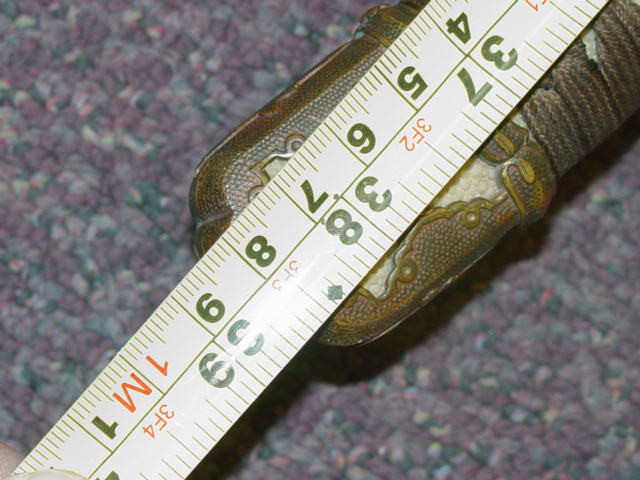
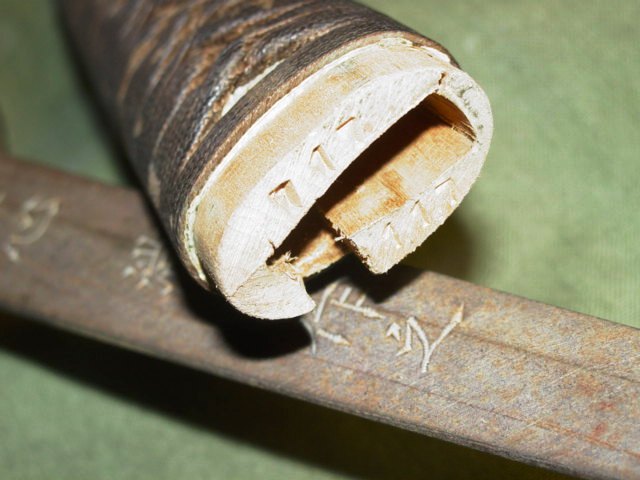
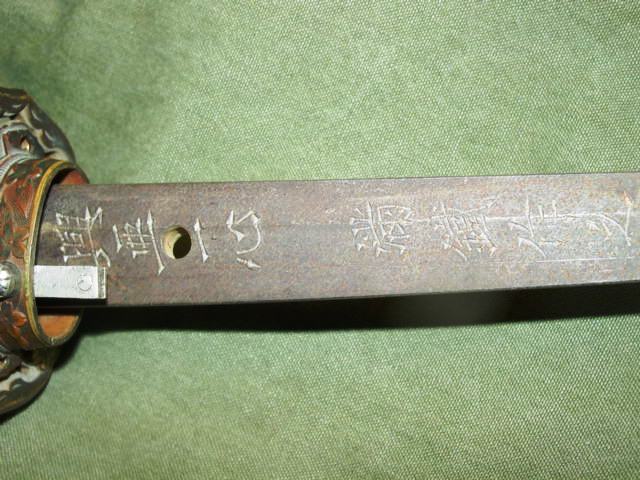
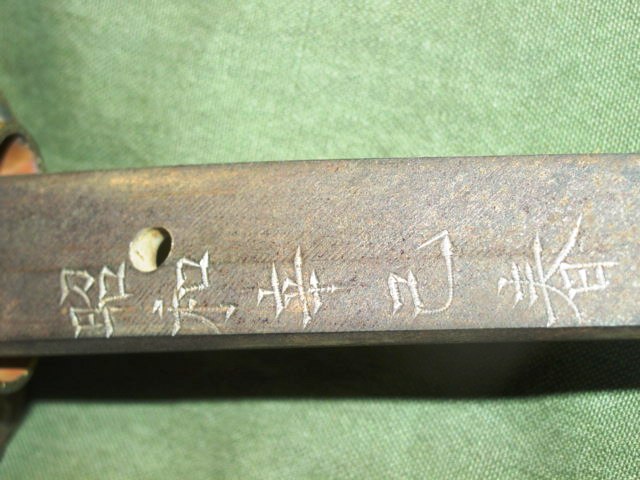
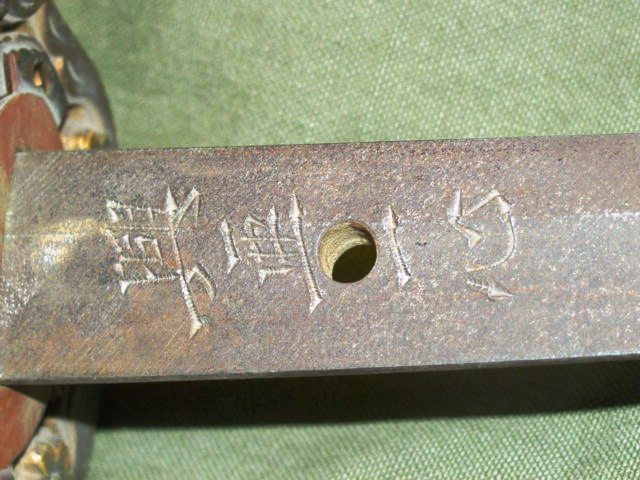
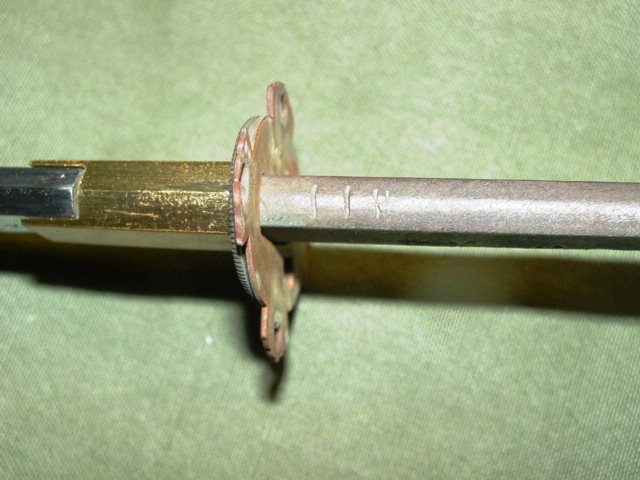
The sword was taken apart. The tang was signed on both sides. The following pictures show the signatures.
Notice that no arsenal markings are found.
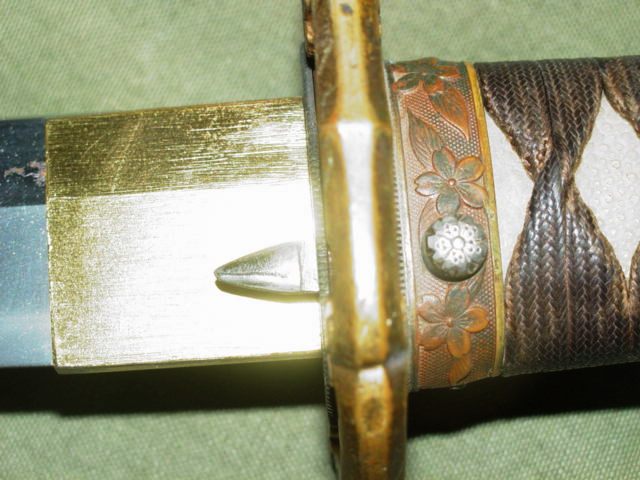
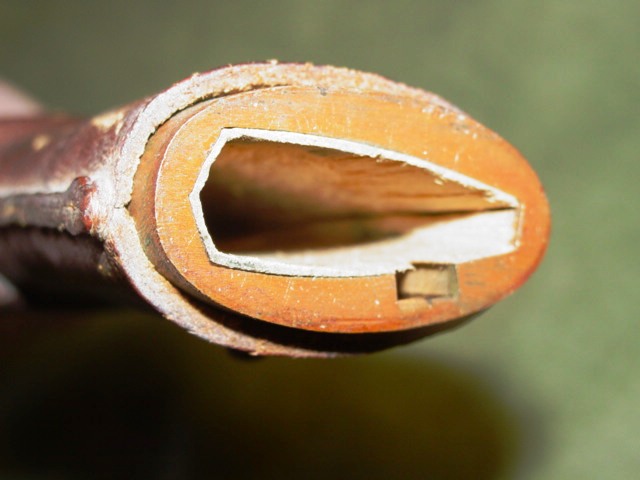
The blade has a locking mechanism which attaches the sword to the scabbard. This prevents it from falling out in the heat of
battle. The locking machanism in this sample works great. Producing an audible "click" when the lock is engaged. The following
photos show the locking system in the sword itself and the receiving end in the wooden scabbard.
Care must be exercised when pulling the sword off the scabbard. A button must be pressed to disangaged the lock. Otherwise there is a risk of breaking the mechanism.
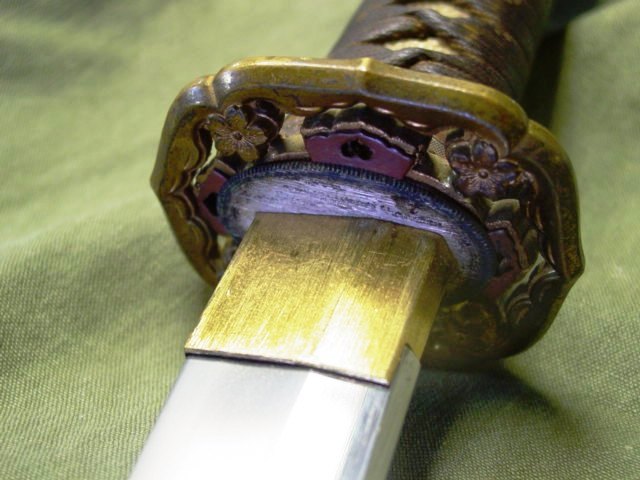
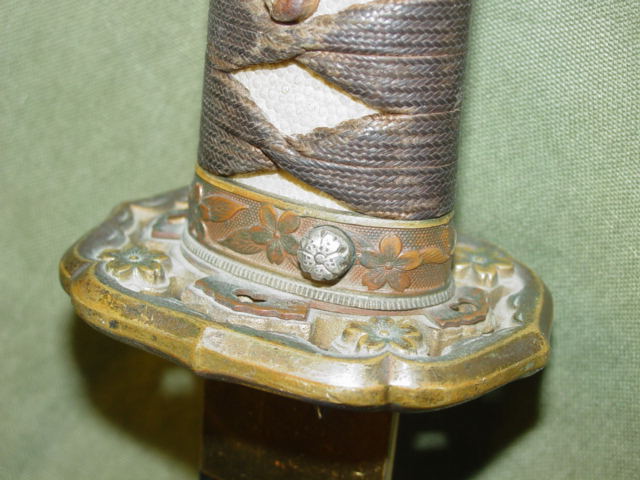
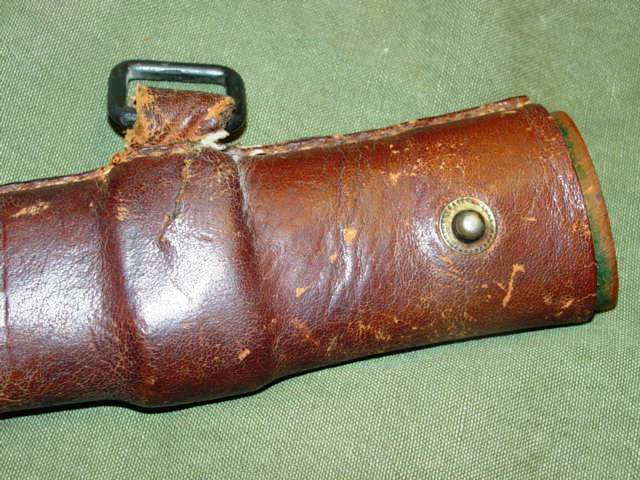
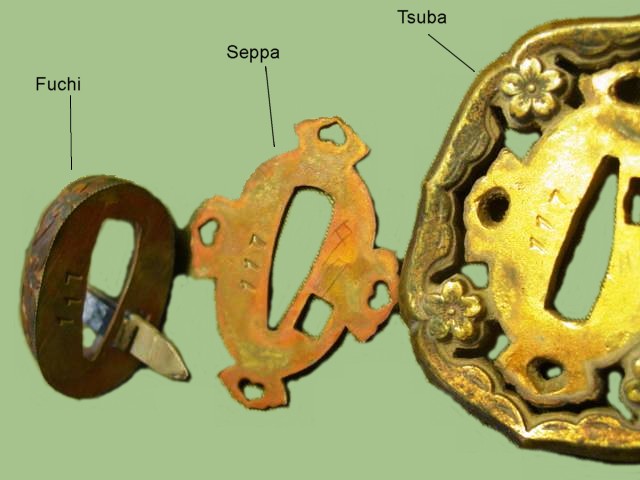
The mountings are clear reflections of the Japanese imperial army. The Tsuba has the cherry blossoms in each corner. The menuki also shows three of the same blossoms. The scabbard is made of wood and wrapped in leather.
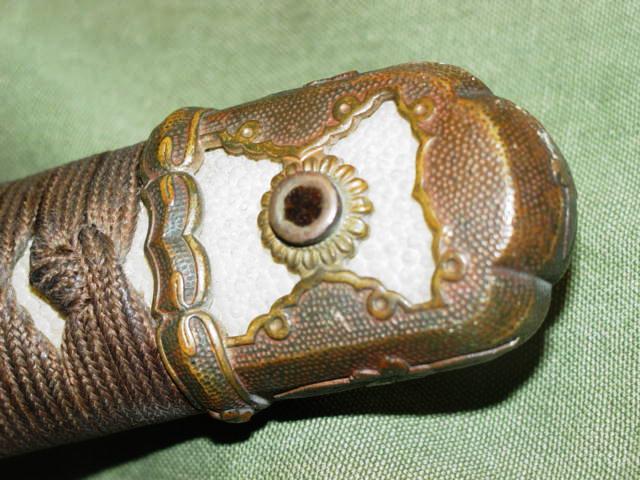
The sword featured here has all matching numbered parts. This is very hard to find in a WWII period Samurai sword because over time
they are taken apart and the parts get lost. The consition of the blade and the fact that the parts are matching numebers are an
indication that the GI brought the sword back and put it away. It is difficult to find un-molested swords.
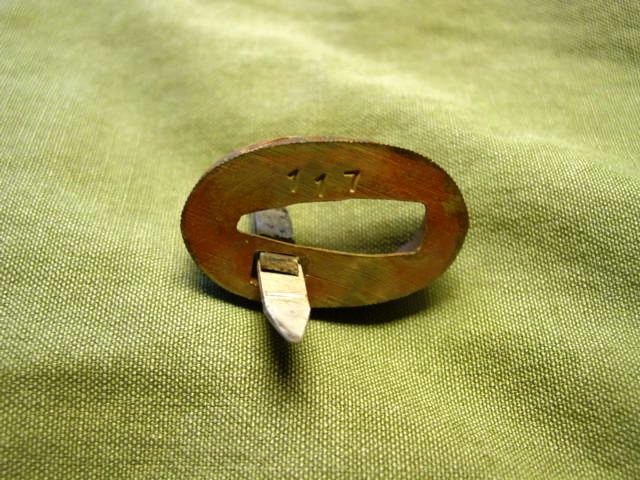
The foloowing photo is a closeup view of the Fuchi. This piece is located at the base of the handle. one of its functions
is to hold the locking release button. The side of the Fuchi is adorned with the same flower and leaf pattern found
in the other components.
This is a WWII Japanese army officer sword. The blades on these swords can be machine made, which
still involves several hand steps, or 100% hand made - in the case of older swords.
By the Numbers
It is next to impossible to determine the exact number of Samurai swords that were produced and issued to
Japanese soldiers during the war. However, thanks to the record keeping maintained by the US Armed Forces,
it is possible to estimate how many swords were actually shipped home.
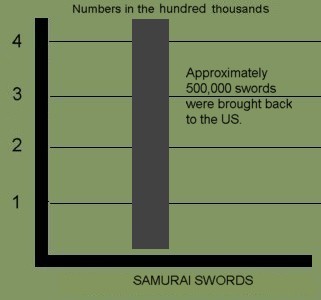 |
There were over 500,000 Samurai swords were brought back home as souvenirs from the war.
There are several caviats to this number.
|
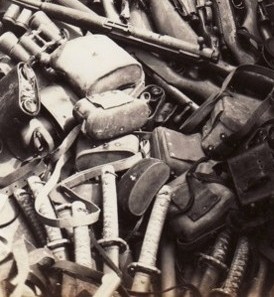 |
For example, some soldiers took souvenirs and shipped them home circumbenting the established process.
Some of the swords were brought back inside duffle bags without anyone knowing except for the soldier who
captured the sword. This fact would clearly affect the final count.
The number also does not account for swords that were taken by Allied soldiers from other countries.
Collecting Samurai swords
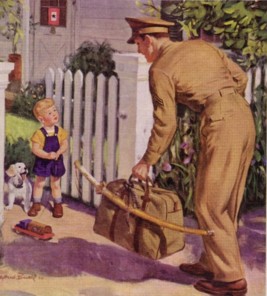
Collecting Samurai swords is a field that has been growing since the days the GI's rummaged around Asia
bringing back military souvenirs. Japanese soldiers carried many of these swords when they went to
battle. Once the soldier was killed or captured, the Americans would take the edge weapons as war trophies.
Eventually all these pieces came back to the United States where military history enthusiasts began to collect them.
 |
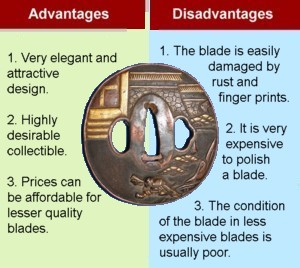
In trying to determine if you should collect Samurai swords there are certain factors that should be
considered.
The adjacent table outlines some of the advantages and disadvantages of collecting the Samurai swords.
|
 |
This Samurai Sword may be currently reproduced.
It is becoming more difficult to be able to tell the fake ones from the real ones because
the quality of the reproductions is improving. The collector must become familiarized with
the construction style and materials employed in the manufacturing of this item.
Attention to the details is critical in order to be able to determine the authenticity of
the collectible.
If you have an interest is seeing other Japanese Samurai swords, you can do so by going to our
Japanese Samurai Swords Price Guide
identification guide. Where we cover Samurai swords from all periods.
| 




 Click on the sword for additional details !