By the Numbers
It is next to impossible to determine the exact number of Samurai swords that were produced and issued to
Japanese soldiers during the war. However, thanks to the record keeping maintained by the US Armed Forces,
it is possible to estimate how many swords were actually shipped home.
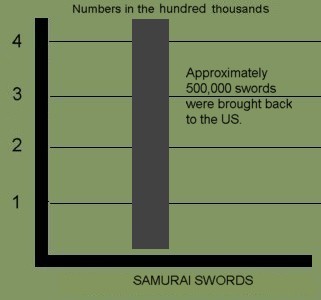 |
There were over 500,000 Samurai swords were brought back home as souvenirs from the war.
There are several caviats to this number.
|
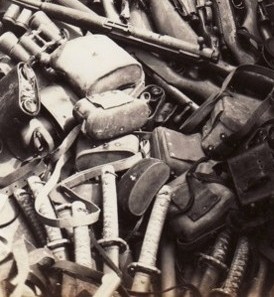 |
For example, some soldiers took souvenirs and shipped them home circumbenting the established process.
Some of the swords were brought back inside duffle bags without anyone knowing except for the soldier who
captured the sword. This fact would clearly affect the final count.
The number also does not account for swords that were taken by Allied soldiers from other countries.
Collecting Samurai swords
Collecting Samurai swords is a field that has been growing since the days the GI's rummaged around Asia
bringing back military souvenirs. Japanese soldiers carried many of these swords when they went to
battle. Once the soldier was killed or captured, the Americans would take the edge weapons as war trophies.
Eventually all these pieces came back to the United States where military history enthusiasts began to collect them.
 |
In trying to determine if you should collect Samurai swords there are certain factors that should be
considered.
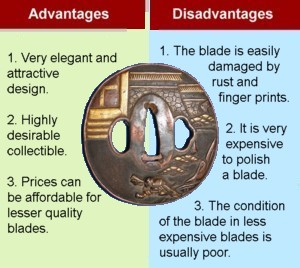
The adjacent table outlines some of the advantages and disadvantages of collecting the Samurai swords.
|
 |
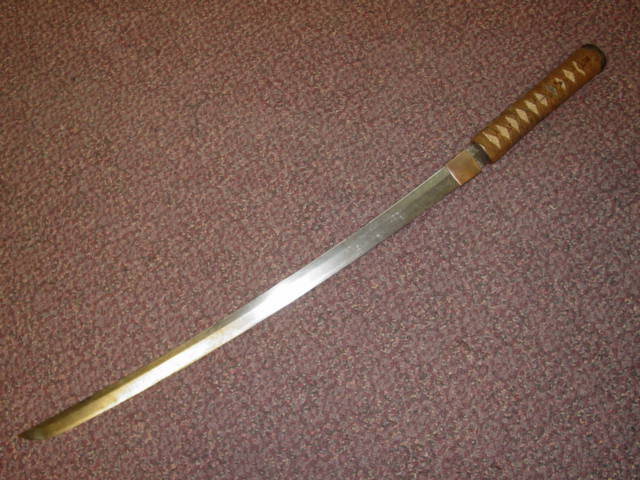
This Samurai Sword may be currently reproduced.
It is becoming more difficult to be able to tell the fake ones from the real ones because
the quality of the reproductions is improving. The collector must become familiarized with
the construction style and materials employed in the manufacturing of this item.
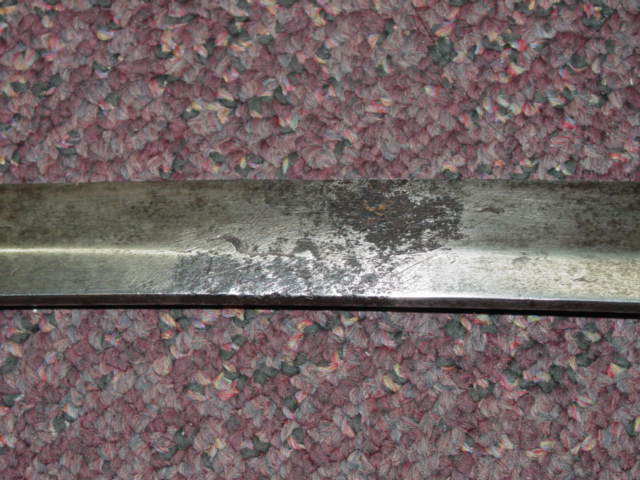
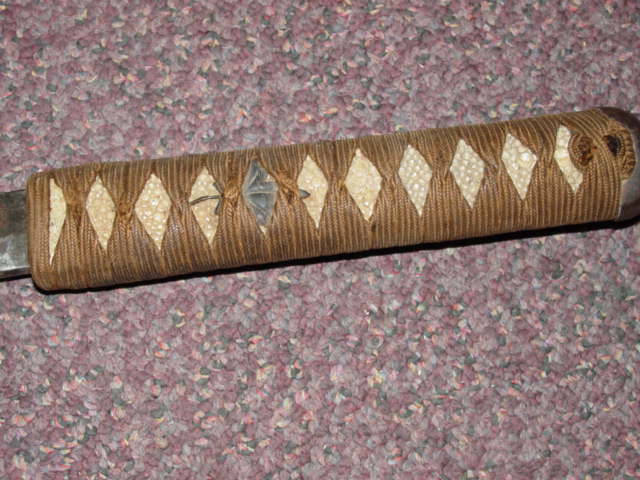
Attention to the details is critical in order to be able to determine the authenticity of
the collectible.
If you have an interest is seeing other Japanese Samurai swords, you can do so by going to our
Japanese Samurai Swords Price Guide
identification guide. Where we cover Samurai swords from all periods.
| 





 Click on the sword for additional details !